🔌
Native protocol, no fork
Codex App runs its usual SSH probe, bootstrap, and app-server proxy. A codex shim earlier in PATH routes only app-server calls into the adapter.
A production TypeScript adapter that speaks the native Codex app-server protocol, so the Codex desktop app drives Claude Code over your normal SSH Remote flow.
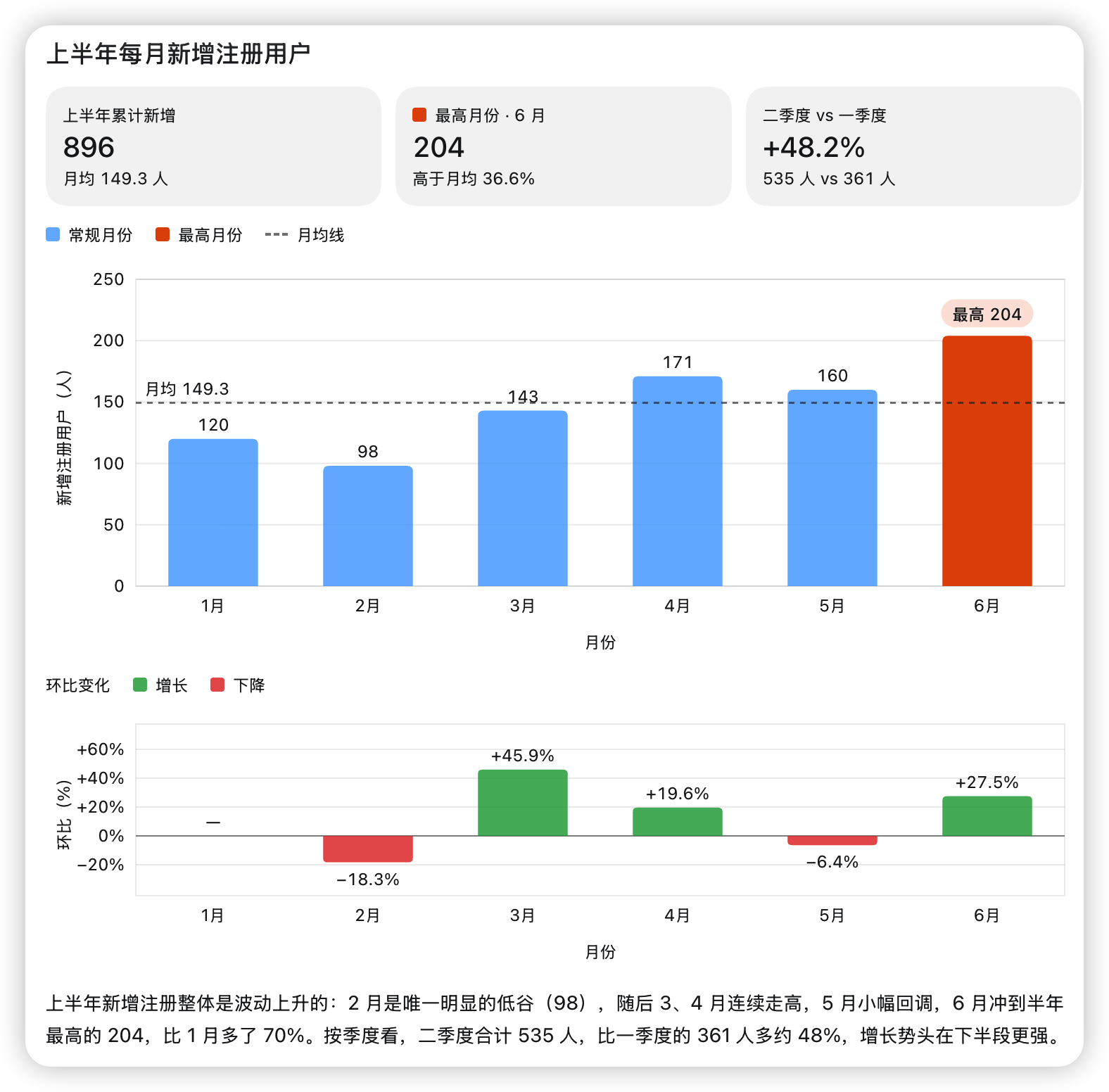
Claude, asked in a Codex App chat to chart six months of signups, answers with an inline visualization that the App renders inside the reply, as it does for Codex. The request was in Chinese, so are the labels. See Inline visualizations.
The adapter implements the Codex app-server v2 protocol (stdio, WebSocket, Unix-socket daemon, and app-server proxy) and bridges each Codex request to a Claude Code runtime. Thread lifecycle, streaming, approvals, MCP, and remote filesystem/command utilities are all backed by real runtime behavior.
The current release path is intentionally narrow. TypeScript remains the production runtime. Rust-first work is present as RFCs, an experimental protocol crate, fixtures, parse/reserialize tests, and a pinned fixture drift gate, but it does not replace the runtime, transport, store, or launcher. Provider and agent-loop work exposes descriptors, sanitized config projection, and explicit selection for known descriptors only; it does not add a new provider runtime, auth system, gateway, subscription model, or multi-agent orchestrator.
Credentials should be supplied by the local user or organization through API keys, official cloud-provider credential chains, same-host local CLI auth, or an approved organization gateway. The project does not support personal subscription pooling, browser cookie/session-token reuse, credential sharing, private endpoints, provider bypasses, or claims of unavailable entitlements. Release checks include CI check, cargo-test, TypeScript tests, the pinned Rust fixture drift gate, docs build for docs changes, and opt-in credentialed smoke or acceptance checks.
npm install
npm run build        # tsc -> dist/ (production artifact)
npm run dev          # tsx src/adapter.mts — run sources directly
npm run doctor       # environment self-check
Then install the codex shim on the remote host and add a Remote connection in the Codex App. See Getting started.
For release gates and reviewer expectations, see Release readiness.
Requires Node.js 24+
The thread store uses node:sqlite, which is only stable (unflagged) on Node 24.